Sunday, August 23, 2026
The Next Data Center Investment Opportunity May Already Be Operating
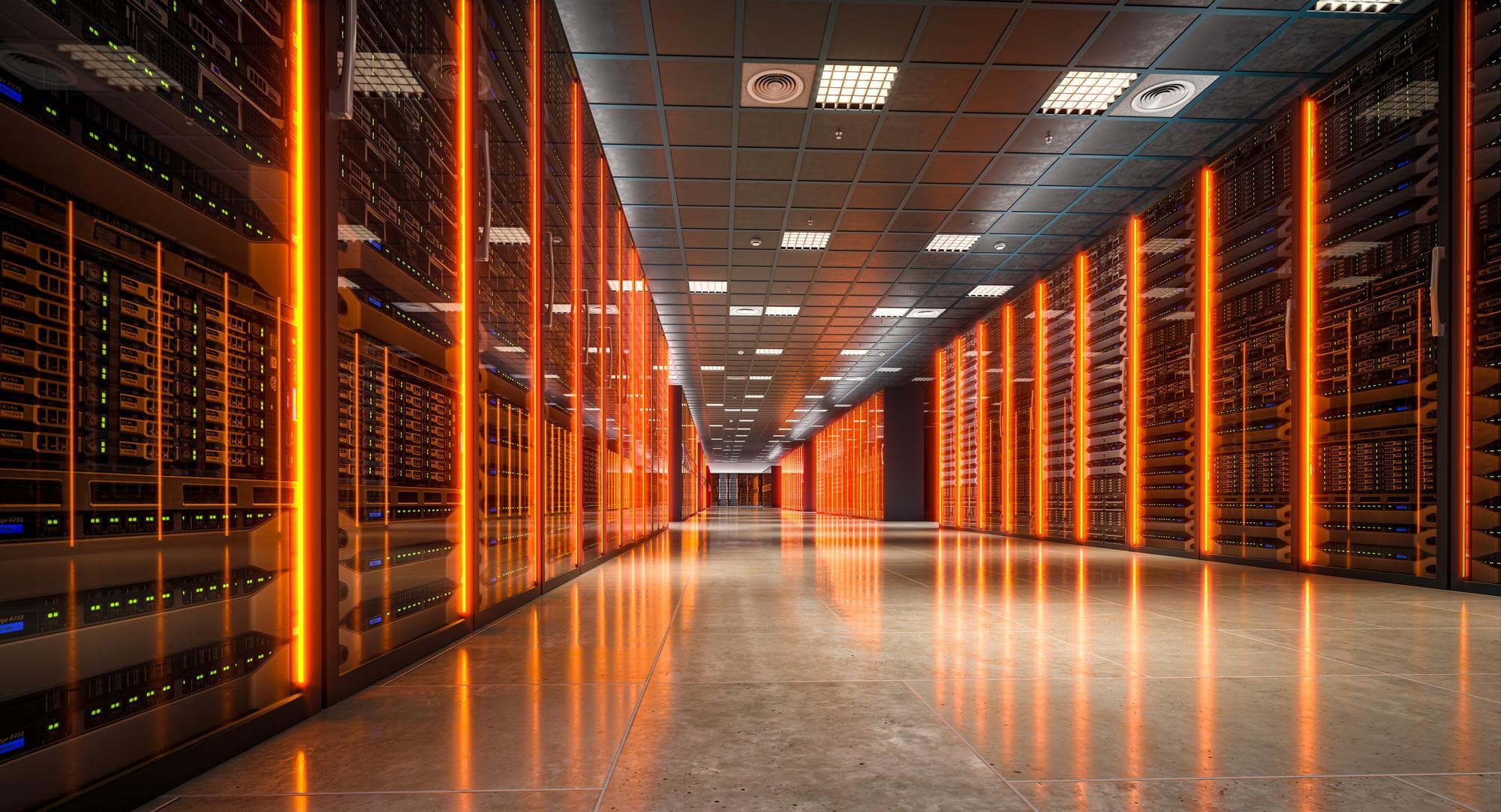
Why Operating Data Centers Are Becoming a Bigger Investment Opportunity
Data center investment has spent much of the recent growth cycle focused on development. New campuses, larger power requirements, emerging markets, and expanding capacity pipelines have attracted substantial institutional attention as investors seek exposure to rising demand for cloud computing, artificial intelligence, and enterprise technology.
Development, however, represents only one part of the opportunity. As more facilities reach stabilization and portfolios mature, existing operating assets are becoming increasingly important to institutional investors. These properties already have operating histories, customer relationships, contracted revenue, and measurable financial performance, creating a different investment profile from projects that remain dependent on construction, leasing, and future power delivery.
This is contributing to a deeper secondary market for data center assets. Operating facilities can change ownership as developers recycle capital, investment funds reach realization periods, portfolios are repositioned, and long-term capital seeks established income. The result is a broader investment market in which attractive opportunities can originate not only from what still needs to be built, but also from assets that are already generating revenue.
Operating Assets Offer a Different Starting Point
Early-stage data center investment requires investors to underwrite what a project is expected to become. Land must be controlled, power secured, approvals obtained, construction completed, customers contracted, and operations stabilized before much of the projected value can be realized. Each of those steps introduces execution risk and requires capital well before a facility reaches full operating performance.
An existing facility changes the starting point. Investors can evaluate actual revenue, utilization, customer concentration, contractual terms, operating costs, historical capital expenditures, power consumption, and financial performance. Instead of relying primarily on assumptions about future operations, underwriting begins with measurable results.
This does not make operating assets risk-free. Lease expirations, customer credit, maintenance requirements, technology changes, power costs, competitive supply, and future capital expenditures still require careful examination. However, the risk profile is different because investors can assess an established operating business rather than underwriting an entirely prospective one.
For institutional capital seeking greater income visibility, that distinction can be significant. An operating facility can provide current cash flow while still offering opportunities for expansion, refinancing, operational improvement, additional leasing, or integration into a larger portfolio.
A Deeper Secondary Market Expands the Investment Lifecycle
The increasing activity around existing data center assets reflects a broader maturation of the investment market. Historically, institutional participation was often concentrated at the company or platform level, with investors providing growth capital, acquiring operating businesses, or funding large development programs. As the installed base of institutional-quality facilities has expanded, there are now more mature assets capable of being bought and sold independently.
This creates additional entry and exit points throughout the investment lifecycle. Investors no longer need to enter exclusively during the development stage or acquire an entire operating platform to gain exposure. They can purchase individual facilities, portfolios of stabilized assets, partial ownership interests, or positions within broader investment structures.
That flexibility matters because institutional mandates vary significantly. Some investors are comfortable taking development and leasing risk in pursuit of higher potential appreciation, while others place greater emphasis on recurring income and lower operational volatility. A deeper market for existing assets allows capital to move toward opportunities that better match those different objectives.
The effect is a more complete capital market. Development remains essential, but it increasingly sits alongside acquisition, recapitalization, refinancing, asset sales, portfolio rotation, and capital recycling as part of the broader investment ecosystem.
Capital Recycling Is Creating New Opportunities
One of the strongest forces supporting secondary-market activity is the need to recycle capital. Data center development requires substantial investment, and even well-capitalized owners cannot fund every future project indefinitely without considering how capital already invested in mature assets is being used.
A typical investment may progress from site acquisition and development through construction, leasing, stabilization, and long-term operation. Once an asset reaches a mature operating stage, its original owner faces a strategic decision. The facility can remain in the portfolio as a long-term income-producing investment, or some of its value can be monetized and redirected toward new opportunities.
For the seller, a transaction can release capital that is no longer required to support the same level of development risk. Those proceeds can then be used for new construction, market expansion, acquisitions, power infrastructure, or other higher-growth initiatives. For the buyer, the same transaction provides immediate access to an established operating asset without requiring the full development cycle.
This creates a natural exchange between different types of capital. One investor may have created value by developing and stabilizing the facility, while another may be better positioned to own the asset during a longer income-oriented phase. Ownership changes because the investment profile has changed, not necessarily because confidence in the underlying asset has declined.
A Sale Does Not Necessarily Signal an Exit From Data Centers
Asset sales can easily be misinterpreted when viewed only at the transaction level. Selling a data center does not necessarily mean an investor is reducing its long-term commitment to the sector. In many cases, the transaction may be part of a broader strategy to reposition capital within the same market.
A mature facility may offer stable income but limited opportunities for incremental investment. The same owner may have development projects that require significant funding and offer greater potential for future growth. Monetizing the stabilized asset can therefore provide capital for those projects without requiring the investor to raise the full amount externally.
Portfolio rotation can also occur between markets or investment profiles. An owner may sell an asset in one geography to increase exposure elsewhere, reduce customer concentration, rebalance development risk, or fund a platform expansion. The capital remains committed to data centers even though the individual asset leaves the portfolio.
This distinction becomes more important as transaction activity increases. Secondary-market liquidity allows capital to move through the sector rather than simply entering once and remaining attached permanently to the same assets.
Different Stages of an Asset Attract Different Investors
The investor best positioned to create a data center is not always the investor best suited to own it for the next several decades. Development, stabilization, and long-term ownership require different combinations of capital, expertise, risk tolerance, and return expectations.
Development-oriented investors may accept entitlement, construction, power, and leasing risk because successful execution can create meaningful value. Once the asset is built, substantially leased, and producing predictable income, the investment begins to resemble a different opportunity. At that point, long-duration capital seeking stable cash flow may find the asset more attractive than it would have during development.
This creates a natural progression of ownership. Early-stage capital can focus on creating and de-risking assets, while income-oriented investors can acquire them once operating performance is established. Neither approach is inherently superior; they simply address different stages of the investment lifecycle.
For the broader market, this specialization can improve capital efficiency. Development capital can be released to pursue additional projects while mature assets move toward investors whose objectives align more closely with stabilized ownership.
Existing Assets Can Accelerate Portfolio Construction
Acquiring operating data centers can also help investors build scale more quickly. Organic development may take years between site selection, power procurement, permitting, construction, commissioning, and customer occupancy. An acquisition can provide immediate exposure to revenue-producing capacity, established customers, and operating markets.
This can be particularly relevant for institutions seeking to increase their data center allocation within a defined investment period. Rather than waiting for an entirely new development program to mature, an investor can combine acquisitions of existing facilities with selective development opportunities.
The two strategies are complementary rather than mutually exclusive. Stabilized facilities can provide current income and portfolio stability, while development projects create future capacity and potential appreciation. Combining both allows investors to balance different stages of risk and return within the same broader strategy.
Existing assets can also provide a foundation for future expansion. A facility may have additional power available, adjacent land, undeveloped shell space, or customer demand that supports further investment. Acquiring an operating asset therefore does not necessarily mean sacrificing growth.
Established Cash Flow Can Support Broader Portfolio Objectives
One of the primary advantages of stabilized assets is the visibility provided by operating income. Predictable cash flow can support distributions, debt service, refinancing, capital planning, and additional investment elsewhere in the portfolio.
This becomes increasingly important as data center portfolios become larger and more capital intensive. Not every asset needs to carry the same growth profile. A portfolio consisting exclusively of early-stage development could provide substantial upside but would also create significant funding requirements and exposure to construction and leasing timelines.
Mature assets can provide a counterbalance. Their established revenue can support a broader strategy that includes more development-oriented investments with longer paths to stabilization. The interaction between income and growth can therefore matter more than maximizing either characteristic within every individual asset.
For institutional investors, this creates another reason to view operating facilities strategically. Their value may extend beyond the return generated at the property level because stable assets can strengthen the financial foundation of an entire portfolio.
Existing Facilities Still Require Technical Underwriting
Operating history reduces certain forms of uncertainty, but existing data centers require detailed technical diligence. A building that has successfully operated for years may still face significant future capital requirements related to electrical systems, cooling equipment, generators, building infrastructure, or changing customer density.
Power is particularly important. Investors need to understand not only current contracted capacity but also whether the utility service, electrical distribution system, and cooling architecture can support future customer requirements. Facilities designed for lower-density enterprise workloads may require substantial upgrades if the investment strategy depends on attracting more power-intensive computing.
Connectivity, physical configuration, available expansion space, equipment age, redundancy, and energy efficiency can also influence long-term value. A stabilized asset with strong current income can still require meaningful capital investment to remain competitive throughout an extended ownership period.
The underwriting challenge is therefore different from development, but it is not necessarily simpler. Investors must understand both the durability of the existing cash flow and the capital required to preserve or enhance that income over time.
Geographic Expansion Is Creating More Acquisition Possibilities
As data center markets mature internationally, the number of investable operating facilities is expanding beyond the largest established markets. This creates additional opportunities for investors seeking geographic diversification without developing every new location themselves.
An acquisition can provide immediate entry into a market where obtaining land, power, permits, or customer relationships organically could require several years. Existing facilities may also provide market knowledge and operating history that reduce some of the uncertainty associated with entering a new geography.
International acquisition strategies still require careful local analysis. Electricity markets, connectivity, construction costs, taxes, environmental requirements, data regulations, customer profiles, and financing conditions vary substantially across regions. An operating asset may reduce development exposure, but it does not eliminate market-specific risk.
The value of geographic diversification therefore depends on strategic fit. Acquiring assets simply to increase the number of markets in a portfolio offers limited benefit if the underlying economics, customer demand, or operating model do not support the broader investment thesis.
A Broader Buyer Base Can Improve Market Liquidity
A deeper secondary market requires multiple categories of buyers with different investment objectives. Data centers increasingly attract infrastructure funds, pension capital, sovereign investment strategies, private capital, income-oriented vehicles, real estate investors, and strategic operators. Each can evaluate the same facility through a different investment lens.
One buyer may prioritize recurring cash flow, while another may value available expansion capacity. A strategic operator may view the facility as a way to strengthen an existing regional network, while a financial investor may value the contractual income and potential for long-term appreciation. An investor entering a new geography may place additional value on immediate market access.
This diversity can create more potential ownership pathways for mature assets. Sellers are not entirely dependent on finding another investor with precisely the same strategy that originally supported development. Assets can move between different pools of capital as their risk and return characteristics change.
Greater buyer depth does not guarantee liquidity during every market cycle, but it can make the sector more flexible. Over time, that flexibility can influence how investors think about holding periods and capital allocation from the beginning of an investment.
Liquidity Changes the Way Assets Are Underwritten
Exit strategy has always been part of institutional investing, but a more active secondary market gives investors additional options. Facilities can potentially be sold individually, transferred as part of a portfolio, recapitalized, contributed to partnerships, or refinanced as operating performance matures.
Understanding those possibilities can influence acquisition and development decisions. Investors may consider which categories of capital could own an asset after stabilization, what characteristics those buyers are likely to value, and which operational or contractual factors could affect future marketability.
This does not mean projects should be developed solely around a future sale. Long-term operational quality remains fundamental. However, assets with durable customers, strong power positions, sound physical infrastructure, credible operating histories, and transparent financial performance can appeal to a broader group of future owners.
Liquidity therefore becomes another component of investment quality. An asset that can support several potential ownership strategies provides greater flexibility than one whose value depends on a narrow set of exit assumptions.
The Secondary Market Is Not Limited to Older or Distressed Facilities
The term "secondary market" can incorrectly suggest obsolete, distressed, or underperforming properties. In data centers, many assets entering the transaction market can be stabilized, highly utilized facilities with strong operating histories and institutional-quality customers.
The reason for sale may have little to do with operating problems. An investment fund may reach the end of its planned holding period, a developer may need capital for new projects, a portfolio owner may decide to rebalance geographic exposure, or partners may restructure their ownership interests. The asset can continue performing well throughout that transition.
This makes operating asset acquisition fundamentally different from a traditional distressed investment strategy. Buyers may be acquiring facilities where the existing business model already works and where the primary objective is to preserve income while identifying opportunities for incremental improvement.
The investment thesis can therefore begin with established performance rather than a turnaround. That can make secondary-market assets relevant to a much broader range of institutional mandates.
Operating Assets Can Still Produce Growth
A stabilized facility does not necessarily represent the end of the value-creation process. Existing data centers can provide multiple opportunities for additional investment and growth depending on the condition of the asset and the surrounding market.
Expansion may come from adding power, fitting out remaining capacity, developing adjacent land, upgrading cooling, improving efficiency, increasing density, attracting additional customers, or integrating the facility into a broader operating platform. In some cases, relatively modest capital improvements can strengthen the asset's ability to serve changing customer requirements.
There can also be strategic value in combining facilities. An asset that offers limited growth independently may provide greater value when integrated into a broader regional portfolio with shared sales relationships, operations, connectivity, procurement, and customer demand.
This creates an attractive middle ground between stabilized income and development. Investors can begin with an operating foundation while retaining exposure to future capital appreciation. The key is determining how much of that future growth is realistically supported by the facility's physical characteristics, power position, market demand, and capital requirements.
More Liquidity Creates More Ways to Invest
The growth of the secondary market is ultimately expanding the range of strategies available to data center investors. Capital can enter during site development, construction, stabilization, platform expansion, recapitalization, portfolio acquisition, or long-term ownership. Investors can also move between these stages as their objectives change.
That flexibility makes the sector more accessible to capital with different return targets and investment horizons. Development-focused investors do not need to remain permanent owners, while long-duration investors do not need to assume all of the risk associated with creating a facility from the ground up.
It also makes portfolio construction more sophisticated. Investors can combine current income, development exposure, geographic diversification, asset-level acquisitions, and platform investments rather than relying on one approach for the entire strategy.
As the market matures, the ability to select the appropriate point in the investment lifecycle may become increasingly important. The question is not simply which data center to own, but when to own it and what role it should play within the portfolio.
Existing Assets Are Becoming a Larger Part of the Opportunity
Data center development will remain essential because the market continues to require substantial new capacity. At the same time, every new facility that reaches stabilization adds to the future inventory of operating assets that can eventually trade between institutional owners.
That creates the foundation for a deeper secondary market. Developers need capital for future projects, investment funds eventually reach realization periods, portfolio owners adjust their strategies, and long-term investors continue seeking assets with established cash flow. These different objectives naturally create transactions.
For investors, this broadens the definition of opportunity. New development can offer significant value creation, but it is no longer the only path to building data center exposure. Existing facilities can provide immediate income, operating history, customer relationships, market access, and, in many cases, further growth potential.
The most compelling opportunity may therefore be a facility that has already moved through the most uncertain stages of its lifecycle. As the data center investment market develops greater liquidity, institutional capital will have more ways to decide where it wants to participate: creating new capacity, owning mature capacity, or combining both within a broader portfolio strategy.