Friday, April 10, 2026
The AI Infrastructure Capital Cycle: Why Data Center Investment Is Becoming a Platform Strategy
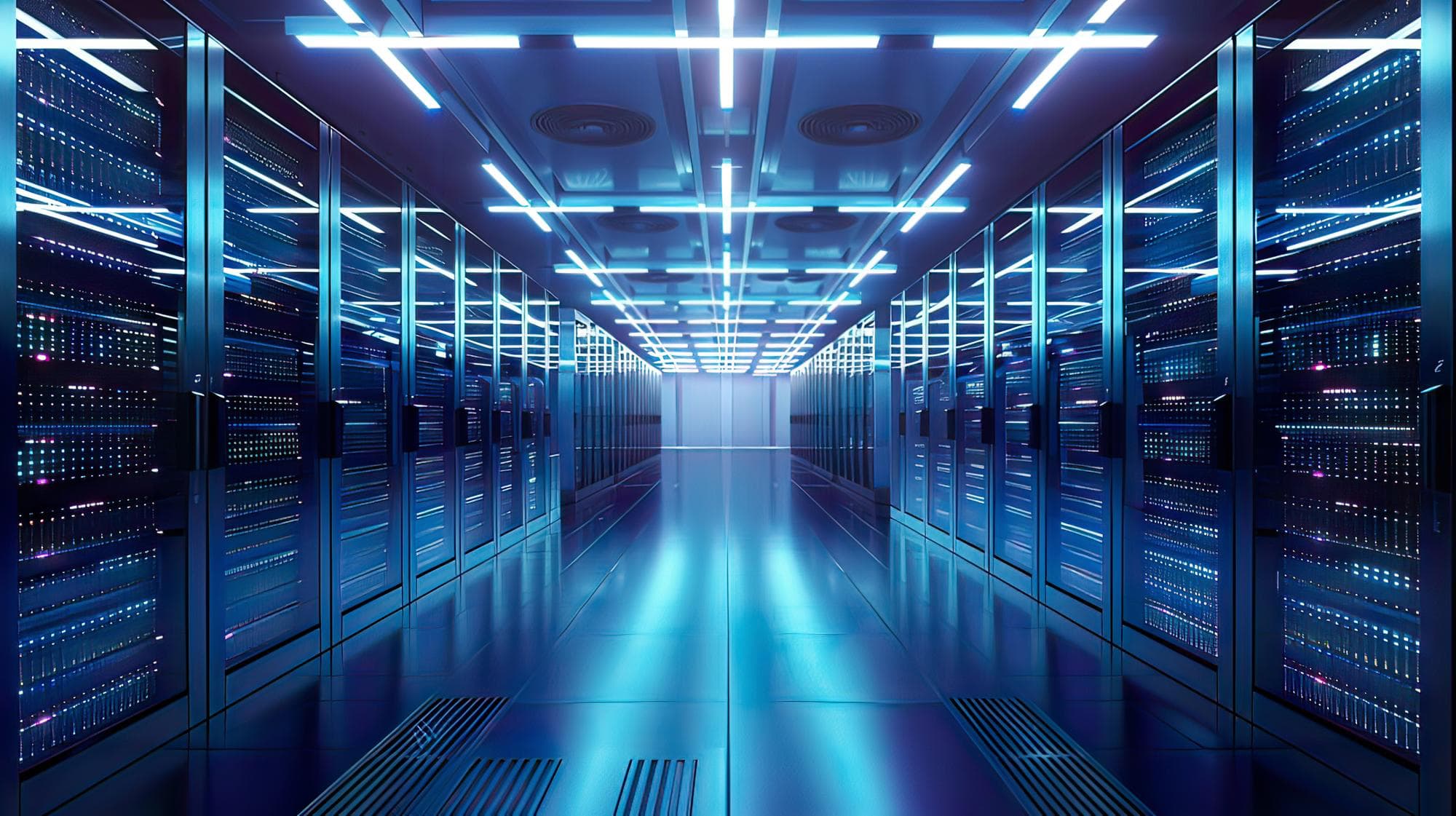
The data center sector is no longer just an infrastructure category. It is becoming one of the defining capital allocation stories of the AI era.
That distinction matters. For years, data centers were often viewed through a relatively narrow lens: stable digital infrastructure, long-duration demand, predictable leasing patterns, and attractive yield characteristics. That framing is no longer sufficient. The market now sits at the intersection of hyperscaler expansion, AI compute demand, private capital deployment, strategic M&A, and an emerging global contest over who will control the platforms underpinning digital growth. McKinsey describes the current moment as one of the largest infrastructure build-outs in modern history, while JLL says the sector is at the beginning of an investment supercycle.
For investors, enterprise technology leaders, and infrastructure decision-makers, the implication is significant: data center investment is evolving from an asset-class discussion into a platform strategy discussion.
That is the shift shaping the market now.
AI Has Changed the Investment Case
The most important change in the sector is not simply that demand is rising. It is that the character of demand has changed.
AI is creating a very different infrastructure consumption pattern from traditional enterprise hosting or even earlier generations of cloud growth. According to McKinsey, AI compute is now increasingly split between training and inferencing, with those two workload types driving hyperscaler strategy in distinct ways. JLL likewise expects a major workload shift, noting that inference demand is poised to become a larger component of the market as AI adoption broadens.
That matters because investors are no longer underwriting generic digital demand. They are underwriting a more complex compute ecosystem in which tenant concentration, deployment velocity, utilization assumptions, and capital intensity all behave differently depending on whether infrastructure is being positioned for cloud, training, inference, sovereign AI, or enterprise AI consumption.
In other words, AI has made data center investment more strategic, but also more selective.
The market is still expanding rapidly, yet the winners are increasingly likely to be those with the right counterparties, the right scale, and the right operating model—not just the right exposure to the sector.
Hyperscalers Are Defining the Market Structure
One reason the sector is becoming more strategic is that hyperscalers are exerting even greater influence over industry shape.
McKinsey estimates hyperscalers are expected to capture about 70 percent of forecast US market capacity through owned or leased options, underscoring how much their infrastructure decisions now determine the direction of the broader ecosystem.
That concentration has major implications for investment strategy.
First, it means demand visibility in the sector increasingly tracks the capital expenditure cycles, AI priorities, and deployment models of a relatively small group of firms. Second, it means that scale advantages matter more than they did in earlier periods of fragmented growth. Third, it increases the premium on relationships, execution certainty, and platform credibility.
This is one of the clearest signs that data center investing is maturing into a platform business. In a platform market, the central question is not only whether demand exists. It is whether an operator or investor is positioned close enough to the key ecosystems of demand to capture it repeatedly over time.
That is why the current cycle is rewarding scaled operators, global platforms, and infrastructure investors capable of underwriting long-duration strategic relevance rather than short-term volume alone.
The Sector Is Moving From Yield Play to Strategic Infrastructure Allocation
For years, digital infrastructure attracted capital because it offered stability and resilience. That logic still exists, but it is no longer the full story.
Today, the sector is drawing capital because it increasingly resembles a strategic infrastructure allocation tied to AI, cloud, software productivity, and national competitiveness. S&P Global says data center and AI-related investments accounted for 80 percent of US private domestic demand growth in the first half of 2025, highlighting the macroeconomic significance of the build-out.
That is a remarkable shift. It suggests data center investment should no longer be viewed only as a niche within digital infrastructure portfolios. It is becoming a core expression of how investors participate in the AI economy.
Blackstone’s 2026 investment perspective similarly frames AI as a multi-year capex cycle spanning data centers, chips, connectivity, and adjacent infrastructure, largely supported by corporate cash flows rather than fragile financing structures. Goldman Sachs goes further, saying AI companies may invest more than $500 billion in 2026 and that hyperscaler capex could reach $700 billion in a scenario comparable to peak historical technology investment cycles.
The business significance is straightforward. When a sector moves from defensive allocation to strategic allocation, the volume and quality of capital pursuing it both increase. But so does competitive discipline. Investors become more sophisticated, underwriting becomes more granular, and simple exposure is no longer enough.
Private Capital Is Becoming More Ambitious—and More Demanding
Private capital is playing a larger role in the sector, but it is not approaching the opportunity passively.
McKinsey’s latest global infrastructure work notes record fundraising and deployment across infrastructure, with the definition of infrastructure itself broadening to include next-generation sectors such as data centers.
This matters because infrastructure funds, sovereign capital, pension capital, and private equity are no longer evaluating data centers solely as stand-alone properties or isolated projects. Increasingly, they are looking at integrated platforms, strategic partnerships, repeatable development engines, and ecosystem control.
That shift changes what is considered investable.
The market is rewarding platform depth over asset-by-asset exposure. A scaled operator with strong hyperscaler relationships, credible delivery capabilities, and a differentiated position in AI capacity may command a meaningfully different valuation narrative than a smaller owner with comparable physical assets but weaker strategic relevance.
This is also why sovereign and institutional investors are becoming more active in the space. The appeal is not only income. It is exposure to the digital backbone of AI-driven growth.
M&A Is No Longer Opportunistic. It Is Structural.
One of the strongest signs that data center investment has entered a new phase is the acceleration of strategic M&A around AI infrastructure.
McKinsey says AI investment is entering a more mature industrial phase, marked by increased infrastructure and platform M&A targeting data center assets, chip design, and model-training capabilities.
That language is important. Mature industrial phases are not defined by experimentation alone. They are defined by consolidation, positioning, and control.
Investors and operators are no longer asking whether AI will drive infrastructure demand. They are asking who will own the most strategic layers of the stack, which platforms will become indispensable, and which acquisitions can turn fragmented exposure into durable market position.
This M&A logic reaches well beyond simple scale. Transactions increasingly reflect a desire to gain access to customers, technical expertise, operating capability, and capital deployment speed. In that sense, M&A has become less about expansion for its own sake and more about compressing time-to-strategy.
For Data Center Invest audiences, this is one of the most important developments in the market. The sector’s future leaders may not be the firms that simply build the most capacity. They may be the ones that best assemble the right operating platforms around AI demand.
Capital Is Globalizing, Even as Demand Concentrates
Another defining feature of the current cycle is the tension between concentrated demand and globalizing investment.
North America remains the largest center of activity. Bain notes that North America continues to lead data center capacity, fueled by hyperscaler capex. But it also points to sovereign AI mandates and enterprise adoption activating regional markets globally. JLL projects APAC capacity to expand from 32 GW to 57 GW by 2030 and says EMEA growth is being supported by sovereign AI cloud demand and privacy-led infrastructure strategies.
This creates a more nuanced market than the classic “primary hub” narrative.
Yes, capital remains highly focused on the largest ecosystems of AI demand. But investors are also increasingly attentive to markets where strategic autonomy, regulatory localization, enterprise modernization, and sovereign compute ambitions are creating new demand pools.
That is especially relevant for global infrastructure capital. It means the next decade of data center investing is unlikely to be purely a US story, even if US hyperscalers continue to dominate the largest share of current capacity decisions.
The broader implication is that investors need a framework that distinguishes between scale markets, strategic markets, and optionality markets. Not every region will become a hyperscaler mega-market. But some may become critical for sovereign AI, regional cloud control, enterprise inference, or platform expansion.
The Market Is Entering an Era of Capital Efficiency Scrutiny
Every investment supercycle eventually faces a harder question: not whether spending is rising, but whether capital is being deployed efficiently.
That question is beginning to emerge in data centers.
Bain notes that hyperscalers are becoming more selective in new deployments, particularly around AI training, even as the market remains strong overall. McKinsey likewise emphasizes the importance of balancing growth and capital efficiency across the compute value chain. S&P Global Ratings has also signaled that the winning odds in 2026 may be less certain than the market’s early enthusiasm implied.
This does not suggest the sector is weakening. It suggests the market is maturing.
In maturing capital cycles, investors begin separating volume from quality. They underwrite duration more carefully. They examine customer concentration more deeply. They test assumptions around utilization, replacement risk, technology transitions, and counterparty strength.
That is healthy for the market. It will likely reduce indiscriminate optimism and increase the premium on disciplined execution.
For operators and investors alike, the message is clear: access to the theme will remain valuable, but quality of exposure will matter more than ever.
Why This Matters for Enterprise Leaders and Infrastructure Decision-Makers
This capital cycle is not only an investor story. It affects enterprise technology strategy directly.
As hyperscaler demand, platform consolidation, and investor competition reshape the supply landscape, enterprise buyers face a more strategic procurement environment. Capacity availability, location of AI-ready infrastructure, counterparty stability, and long-term platform alignment all become more important when selecting providers and planning digital growth.
The shift also changes how infrastructure decisions are framed internally. Data center choices are no longer just procurement choices. They are decisions about access to future AI capacity, partner ecosystems, and digital resilience.
That makes market structure highly relevant for CIOs, CTOs, and enterprise infrastructure teams. The capital behind the sector is influencing the options available to customers.
The Next Phase: From Expansion to Positioning
The next phase of the market will not be defined simply by who spends the most. It will be defined by who is best positioned.
Goldman Sachs sees a scenario in which AI investment continues rising sharply. McKinsey frames the sector as part of a multitrillion-dollar infrastructure race. BlackRock, Microsoft, GIP, and MGX have already launched a major AI infrastructure partnership to invest in expanded data center capacity and adjacent infrastructure, a reminder that some of the world’s largest capital pools now see this market as strategically central.
That combination of scale, strategic capital, and market concentration suggests the sector is entering a new era.
In that era, the most valuable positions will likely belong to investors and operators that understand three things at once: first, AI demand is real and durable; second, not all capacity is equally strategic; and third, data centers are increasingly part of a broader platform contest over who controls the infrastructure layer of digital growth.
That is why this cycle deserves to be understood not as another wave of infrastructure spending, but as a reordering of digital investment priorities.
The most important thing happening in data center investment today is not merely that more capital is entering the market. It is that the market itself is changing shape.
AI has elevated data centers from a resilient digital infrastructure category into a strategic platform layer for the global economy. Hyperscalers are concentrating demand. Private capital is scaling up. M&A is accelerating. Sovereign and institutional investors are widening the geographic map. And underwriting standards are becoming more sophisticated as the cycle matures.
For decision-makers, that creates both urgency and opportunity.
The winners in the next phase of the market will not simply be those with exposure to data centers. They will be those who understand that AI infrastructure is turning data center investment into a platform strategy and who position themselves accordingly.