Friday, December 5, 2025
Liquid Cooling vs. Air Cooling: How AI Density and Power Constraints Are Rewriting Data Center Thermal Strategy
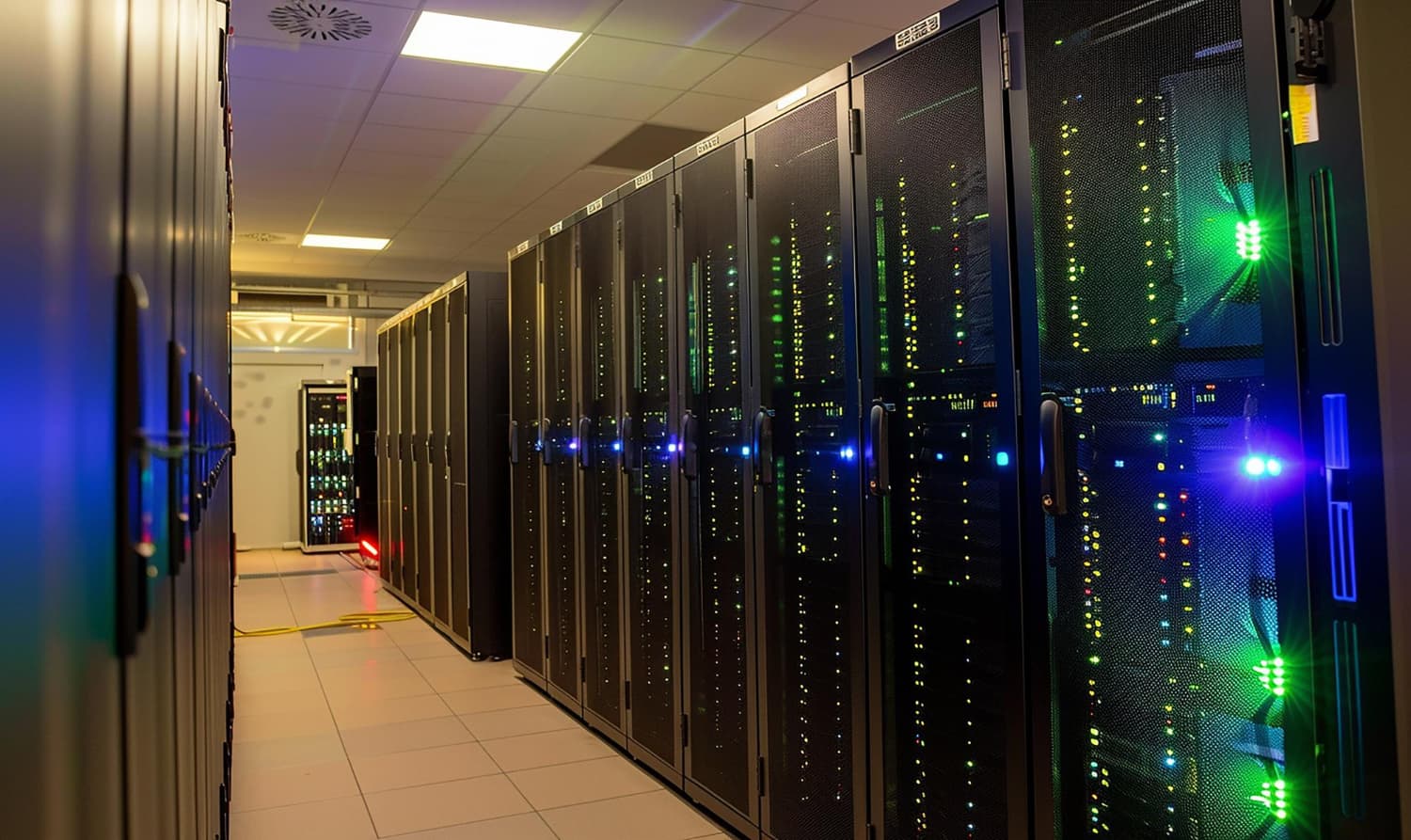
For decades, air cooling has been the dominant thermal strategy in data center design. Even as server density increased and cloud adoption escalated, the fundamental principles of air cooling remained highly effective, cost-efficient, and reliable. But the emergence of AI workloads, GPU-intensive architectures, and unprecedented rack densities has forced data centers to confront a new reality: traditional cooling methods are reaching their practical limits.
The shift from CPU-based architectures to GPU-accelerated, AI-driven compute has transformed how power is consumed, how heat is generated, and how cooling must be delivered. At the same time, global power constraints, sustainability pressures, grid congestion, and water limitations are shaping what cooling methods are viable in different regions and facility types. The result is a structural transition in the data center industry, where liquid cooling—once considered niche—is rapidly moving into mainstream deployment.
This article explores how liquid cooling and air cooling differ, the challenges each model faces, the catalysts behind the industry’s accelerated adoption of liquid cooling, and what operators, enterprises, and hyperscalers must consider as they plan for AI-driven infrastructure in the years ahead.
1. Why Cooling Is Being Reimagined
Cooling was once a relatively predictable engineering discipline in data center design. Traditional enterprise workloads rarely exceeded moderate power density, and even early cloud environments were built on homogeneous, CPU-driven architectures. The cooling systems needed to support these environments were significant in scale but relatively straightforward in execution.
Today, everything has changed.
AI, GPUs, and density are the new disruptors.
Large language models, computer vision pipelines, generative workloads, simulation engines, and inference environments require massive parallel computation. That means:
- GPU servers instead of CPU servers
- Rack densities jumping from 8–12 kW to 40–120 kW
- Large clusters of interconnected accelerators (NVIDIA HGX, AMD MI300, etc.)
- Enormous heat loads per square foot
These thermal demands far exceed what traditional raised-floor or hot-aisle/cold-aisle air cooling systems were built to support.
Power constraints amplify the challenge.
Even if air systems could theoretically handle higher temperatures, the power needed to push sufficient air volume becomes unsustainable in a world where:
- Power availability is scarce in major metros
- Substation timelines stretch 3–10 years
- Renewable sourcing mandates restrict total load
- Power utilization effectiveness (PUE) must continuously improve
This combination of massive heat output + limited energy supply is forcing the industry to rethink thermal strategy from the ground up.
2. Air Cooling: Strengths, Limitations, and Its Evolving Role
Air cooling remains the most widely deployed thermal method in data centers globally. It is familiar, standardized, cost-effective, and supported by decades of operational experience.
But in the AI era, its limitations are becoming more apparent.
A. Strengths of Air Cooling
1. Maturity and reliability
Air cooling has been optimized for decades. Operators understand it well, and suppliers have robust ecosystems around it.
2. Lower upfront investment
Most facilities already have built-out air cooling systems, making continued use cost-attractive.
3. Flexibility for mixed-use environments
Data centers supporting varied workloads (cloud, enterprise, edge) benefit from the universality of air cooling.
4. Broad compatibility
All commercial servers support air cooling; retrofits are minimal.
5. Ease of deployment
Air-cooled equipment racks and containment systems can be deployed quickly, making air cooling a strong match for retail colocation environments that require rapid provisioning.
B. Limitations of Air Cooling (More Visible Than Ever)
1. Density ceilings
Beyond ~20–30 kW per rack, air cooling hits physical and mechanical limits. AI racks can exceed:
- 40–60 kW (moderate-density GPU clusters)
- 80–120+ kW (advanced AI training systems)
Cooling these loads with air alone becomes extremely inefficient or infeasible.
2. Energy intensity
Fans, chillers, and CRAC/CRAH systems consume significant energy, impacting PUE and sustainability metrics.
3. Airflow challenges in legacy facilities
Older buildings with low ceilings or raised floors cannot easily support the airflow required for high-density AI rows.
4. Hotspot unpredictability
AI workloads vary thermally, creating uneven heat distribution and thermal unpredictability.
5. Space inefficiency
Air cooling often requires larger whitespace footprints to maintain airflow integrity.
In 2026, these limitations are felt sharply in dense metros where power scarcity magnifies inefficiencies.
3. Liquid Cooling: The Technology Behind AI-Era Compute
Liquid cooling is not new; HPC environments have used some form of liquid cooling for years. But what’s different now is scale.
Hyperscalers, GPU manufacturers, and major colocation operators are deploying liquid cooling at an unprecedented pace, driven by the physics of AI compute.
There are multiple methods of liquid cooling, each serving different density and workload profiles:
A. Direct-to-Chip (Cold Plate) Liquid Cooling
This method uses water or coolant pumped through cold plates in direct contact with CPU/GPU packages.
Benefits:
- Supports high-density racks (40–120 kW+)
- Extremely efficient thermal transfer
- Lower fan use
- Compatible with today's major AI servers (NVIDIA, AMD, Intel)
Limitations:
- Requires facility retrofit or redesign
- Still needs limited airflow for secondary components
- Leak detection and plumbing add complexity
Cold-plate cooling is becoming the default for modern hyperscale AI deployments.
B. Immersion Cooling
Servers are submerged either partially or fully into dielectric fluid.
Benefits:
- Supports densities well above 100 kW per rack
- Quiet operation
- Potentially eliminates need for air circulation and fans
- Highly efficient
Limitations:
- Not yet standard across all server vendors
- Operational complexity is higher
- Requires custom enclosures and workflows
Immersion cooling is ideal for HPC and experimental ultra-dense AI training clusters.
C. Rear-Door Heat Exchangers (RDHx)
A hybrid approach: a liquid-cooled door extracts heat at the rear of racks.
Benefits:
- Good for retrofitting existing facilities
- Supports moderately high densities (20–50 kW)
- Low disruption to layout
Limitations:
- Not ideal for extreme loads
- Still relies on some airflow
RDHx is a popular option in retail colo environments upgrading for AI workloads.
4. Why Liquid Cooling Is Becoming the Strategic Default for AI
Liquid cooling is not simply a trend — it is becoming foundational to the next generation of data centers.
The reason is simple: physics.
1. Liquid has far higher heat-transfer efficiency than air
Water is ~3,500x more effective at absorbing heat than air.
2. Allows for much higher rack densities
GPU clusters generate intense, localized heat that liquid cooling can dissipate directly at the source.
3. Reduced energy consumption
Fewer fans → lower power usage → improved PUE.
4. Enables denser footprints in power-scarce markets
When power is constrained, maximizing compute per square foot is critical.
5. Mitigates thermal unpredictability of AI workloads
AI inference vs training varies dramatically in heat output; liquid cooling handles extremes more gracefully.
6. Supports sustainability goals
Liquid cooling can integrate with heat reuse strategies and district heating systems.
7. Aligns with hyperscaler and chipset roadmaps
NVIDIA, AMD, and Intel all design next-gen chips with liquid cooling in mind.
In short: AI workloads require it, and power constraints demand it.
5. How Power Constraints Influence Cooling Decisions
Power scarcity is the defining infrastructure constraint of the decade.
In major data center metros—Northern Virginia, London, Frankfurt, Singapore, Phoenix—grid congestion is limiting future supply. As a result, operators must optimize every watt.
Air cooling requires significant power overhead.
Liquid cooling dramatically reduces cooling energy consumption, helping meet:
- ESG goals
- Utility-imposed limits
- PUE benchmarks
- Density requirements without additional grid load
In markets with limited available power, liquid cooling becomes an economic necessity, not just a technical one.
6. The Role of Sustainability, Water Usage, and Environmental Regulations
Global regulations increasingly influence cooling strategies.
Air Cooling Challenges:
- High energy consumption
- Large mechanical infrastructure requirements
- Environmental impact linked to refrigerant systems
Liquid Cooling Advantages:
- Lower operational energy
- Potential heat reuse applications
- Modular systems reduce infrastructure footprint
- Reduced mechanical cooling dependence
However:
Water Use Is a Critical Variable
Liquid cooling doesn’t always require water, but some implementations do—and many regions restrict water availability.
Thus, air, liquid, and hybrid cooling systems are often chosen based on local environmental policy.
7. Retail Colocation vs. Wholesale Colocation Cooling Strategies
Cooling choices often differ between retail and wholesale colocation environments due to their distinct design, density, and deployment models.
Retail Colocation Cooling Characteristics
Retail colo facilities prioritize:
- Fast provisioning
- Multi-tenant environments
- Moderate power densities
- Interconnection-rich design
Retail Cooling Trends:
- RDHx upgrades for AI workloads
- Mixed thermal zones (air-cooled + liquid-ready pods)
- Containment modernization
- Limited adoption of full immersion cooling (for now)
Retail colocation is evolving faster than ever—but wholesale leads for AI-scale cooling.
Wholesale Colocation Cooling Characteristics
Wholesale colo supports:
- High-density AI compute
- Multi-MW deployments
- Build-to-suit customization
- Campus-wide thermal infrastructure
Wholesale Cooling Trends:
- Direct-to-chip liquid becoming standard in new builds
- Custom liquid distribution networks
- Combined heat reuse loops
- Immersion cooling options for HPC tenants
- High-volume procurement for hyperscalers
Hyperscalers drive the majority of liquid cooling evolution, and wholesale providers follow closely.
8. Hybrid Cooling: The Bridge Between Today’s Facilities and Tomorrow’s AI Infrastructure
Hybrid cooling strategies are often the answer for facilities that cannot fully convert to liquid cooling.
Hybrid Examples:
- RDHx + partial liquid
- Air cooling for storage, liquid for compute
- Gradual migration through phased retrofits
- Zonal cooling (different methods in different sections of the data hall)
Hybrid cooling enables multi-tenant operators to support AI workloads without abandoning air-cooled customers.
9. Considerations for Operators Planning Cooling Strategy Transitions
Adopting liquid cooling requires more than equipment—it requires operational transformation.
Key considerations:
- Floor layout adjustments
- Liquid distribution infrastructure
- Staff training for liquid systems
- Leak detection protocols
- Vendor certification requirements
- Server warranty alignment
- Power/cooling contract revisions for tenants
- Higher-density SLAs
- Future-proofing for chip generations not yet released
Cooling strategy is now a core part of commercial strategy — not just engineering.
10. What the Future Looks Like: A Convergence, Not a Winner
Air cooling is not going away. Many facilities will remain air-cooled for decades, especially for:
- Storage-heavy workloads
- Latency-sensitive edge compute
- Enterprise mixed workloads
- Markets with lower AI penetration
Liquid cooling will dominate:
- AI training clusters
- HPC centers
- Sovereign AI deployments
- Multi-MW hyperscale expansions
- Massive GPU farms
- Power-scarce metros where density is critical
The future belongs to mixed cooling ecosystems.
The data center industry will rely on varied cooling solutions based on workload, density, location, and energy profile—not a single winner.
The rapid rise of AI density, global power constraints, and hyperscale campus development is redefining how data centers manage heat. Air cooling, once the unquestioned standard, now faces clear limitations as GPU-driven workloads push power densities well beyond traditional design thresholds. Liquid cooling—whether through direct-to-chip, immersion, or hybrid implementations—is emerging as a critical enabler of next-generation compute, unlocking new efficiencies and supporting densities that air can no longer sustain.
Yet this transition is not a simple replacement. Both air and liquid cooling will coexist, each serving different workload profiles and infrastructure strategies. Retail colocation will increasingly adopt hybrid thermal zones to accommodate AI workloads while supporting legacy compute. Wholesale providers will continue pushing into full-scale liquid cooling, driven by hyperscalers that require massive, scalable, and energy-efficient thermal infrastructure.
In the end, the question is not which cooling technology will dominate outright — but how data centers will intelligently combine these methods to meet the demands of AI-driven architectures, sustainability mandates, and global power limitations. Cooling has become a strategic differentiator in data center design. And as the industry moves into a new era of ultra-dense compute, the ability to innovate in thermal management will determine who leads the next wave of digital infrastructure.