Sunday, February 15, 2026
Hyperscale Campuses Are Now Competing With Core Infrastructure Assets
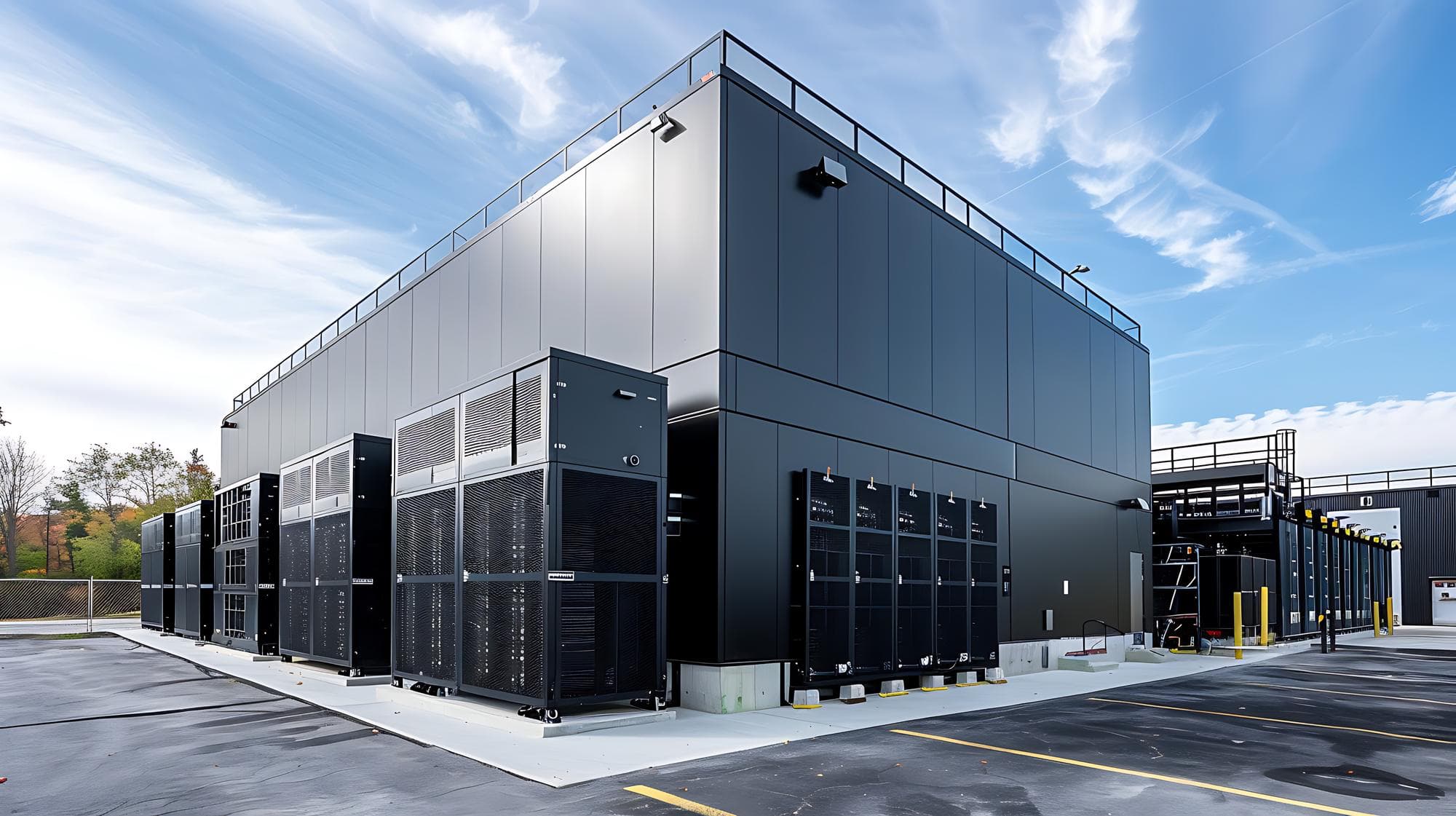
Hyperscale data center campuses were once treated as specialized real estate—large, capital-intensive projects tied closely to the growth cycles of a small number of technology companies. They sat outside the traditional definition of core infrastructure, often categorized as opportunistic or growth-oriented investments rather than long-duration assets.
That categorization no longer holds.
Today, hyperscale campuses are increasingly evaluated alongside core infrastructure assets such as energy generation, transportation networks, and communications systems. The reason is not hype or technological novelty. It is that the economic and operational characteristics of hyperscale campuses have converged with what institutional capital defines as “core.”
This convergence is reshaping allocation strategies, valuation benchmarks, and competitive dynamics across global infrastructure portfolios.
Scale Has Become a Stabilizing Feature, Not a Risk
In earlier cycles, the sheer scale of hyperscale campuses was viewed as a risk.
Large capital commitments, tenant concentration, and long development timelines raised concerns about flexibility and exit optionality. Those concerns made sense when demand growth was uncertain and workloads were more mobile.
That environment has changed.
Today, scale provides resilience. Large campuses support sustained, predictable demand from tenants whose growth trajectories are measured in decades, not quarters. Scale now reduces volatility rather than amplifying it.
Hyperscale Demand Behaves Like Utility Demand
One of the defining characteristics of core infrastructure is demand stability.
Hyperscale demand increasingly resembles utility demand:
- Continuous operation
- High switching costs
- Long planning horizons
- Limited discretionary reduction
Once deployed, hyperscale workloads are rarely scaled down or relocated. This behavior aligns far more closely with infrastructure usage than with traditional real estate tenancy.
Capital recognizes this shift.
Long-Term Contracts Mirror Infrastructure Concessions
Lease structures at hyperscale campuses have evolved.
Long-dated contracts, extension options, and renewal probability now resemble infrastructure concessions more than commercial leases. Revenue visibility extends well beyond initial terms, supporting lower discount rates and longer hold assumptions.
This contract durability is a key reason hyperscale campuses are being reclassified.
Capital Expenditure Profiles Support Long Duration
Core infrastructure assets typically require high upfront capital but offer long economic lives.
Hyperscale campuses fit this model. Initial build costs are significant, but once operational, incremental investment supports decades of use. Continuous upgrades extend relevance rather than replace assets entirely.
This capex profile aligns with long-term infrastructure investment mandates.
Hyperscale Campuses Are Systemically Important
Core infrastructure assets are essential to economic function.
Hyperscale campuses increasingly meet that definition. They underpin cloud platforms, AI systems, financial services, logistics, healthcare, and public-sector operations.
As digital dependency deepens, hyperscale infrastructure becomes systemically important rather than optional.
Systemic importance attracts infrastructure capital.
Valuation Benchmarks Are Converging
This reclassification is visible in valuation behavior.
Hyperscale campuses are trading at yields comparable to—or tighter than—traditional infrastructure assets. Buyers underwrite them using infrastructure-style metrics rather than real estate comparables.
This convergence signals a lasting shift in how the market perceives risk and durability.
Tenant Concentration Is Being Reinterpreted
Tenant concentration once deterred core capital.
Today, tenant concentration is being reframed as counterparty quality. A small number of investment-grade or quasi-sovereign counterparties can be preferable to diversified but weaker tenant pools.
Hyperscale campuses often host precisely this type of counterparty.
Concentration risk has become concentration strength.
Portfolio Allocation Is Catching Up to Reality
Many institutional portfolios remain underallocated to hyperscale infrastructure relative to its economic importance.
As classification shifts, allocation targets are being revised. What was once capped as a niche exposure is now expanding toward core allocation thresholds.
This reallocation is still in its early stages.
Hyperscale Campuses Compete Directly for Capital
The practical result is competition.
Hyperscale campuses now compete directly with:
- Energy infrastructure
- Transport assets
- Communications networks
They are evaluated on similar criteria: duration, essentiality, resilience, and yield stability.
In many cases, hyperscale campuses now win.
Risk Has Shifted From Demand to Execution
As hyperscale demand becomes assumed, the primary risk shifts to execution: power delivery, regulatory alignment, and timing.
Investors are comfortable with the demand story. They are selective on execution quality.
This is a hallmark of mature infrastructure asset classes.
The Classification Shift Is Structural
This is not a temporary re-rating.
Hyperscale campuses have crossed a structural threshold. Their scale, durability, and economic role align with the definition of core infrastructure.
As a result, they will increasingly be financed, valued, and held like core assets.
The competition they now face is no longer other real estate projects.
It is the global infrastructure universe itself.