Monday, December 8, 2025
How Data Center Developers Are Solving the Power Shortage Crisis
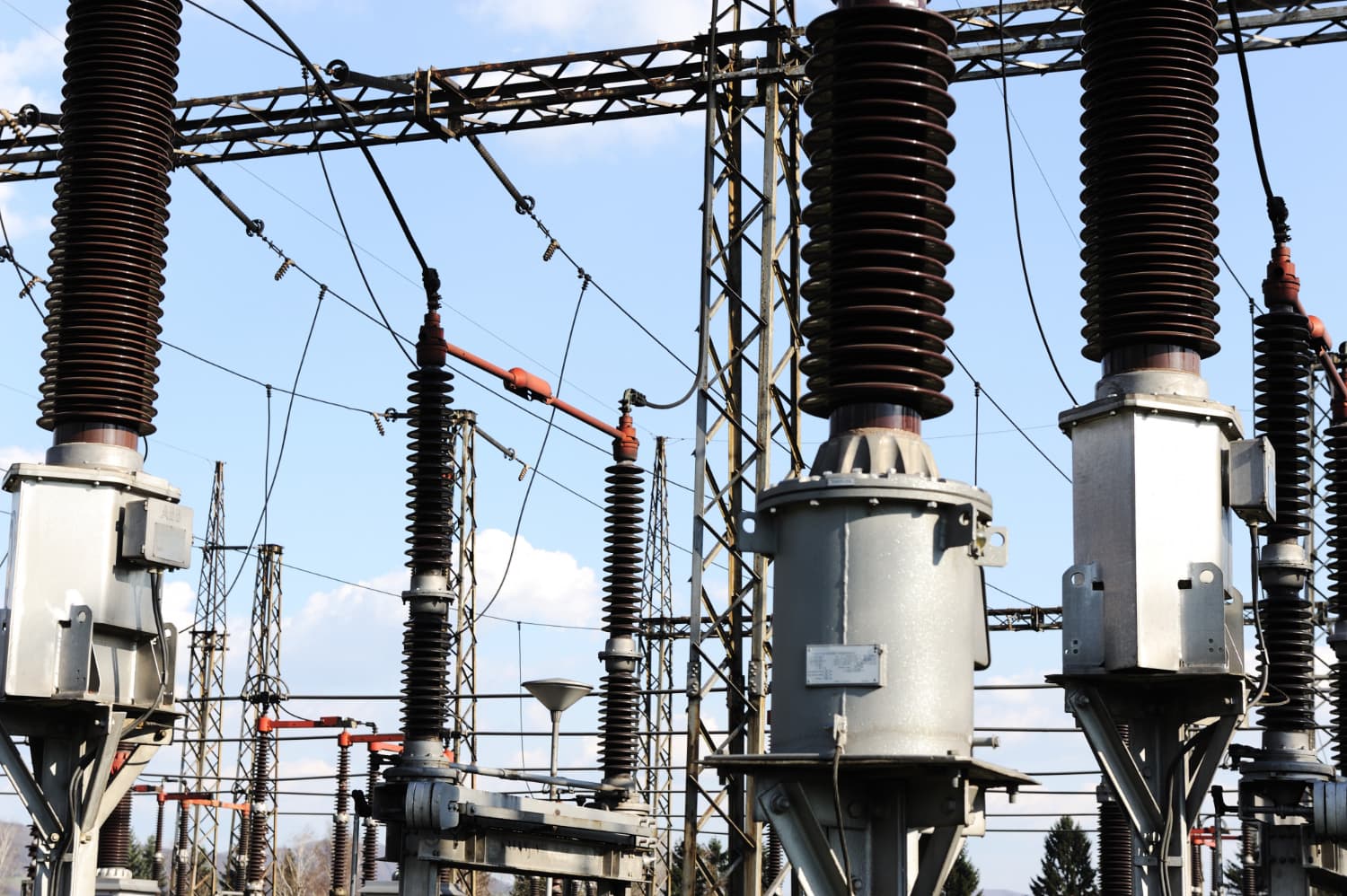
The global data center industry is experiencing the most severe power shortage in its history. Hyperscalers, cloud providers, AI companies, and colocation operators are running into grid constraints that threaten their ability to scale. Power has become the new currency of digital infrastructure — more valuable than land, fiber, or even capital.
Regions such as Northern Virginia, Dublin, London, Singapore, Frankfurt, Portland, Silicon Valley, and Phoenix are facing multi-year delays for new grid capacity, forcing developers to rethink everything from site selection to energy procurement.
At the same time, the rapid acceleration of AI has created an unprecedented spike in demand. GPU clusters can require 50–120 kW per rack, with entire facilities consuming hundreds of megawatts. The infrastructure needed to support AI is far beyond the design assumptions of traditional hyperscale data centers.
The Root Causes of the Power Crisis: Why the Grid Can’t Keep Up
The shortage is not caused by one single factor — it is the result of multiple global forces converging simultaneously.
AI and Hyperscale Demand Has Exploded
AI training clusters consume far more power than traditional cloud workloads. A single training run for a large language model can require:
- Thousands of GPUs
- 20–40 MW per cluster
- Round-the-clock utilization
This places massive and persistent demand on already strained grids.
Electric Grids Were Never Designed for this Load
Most national and regional grids were built decades ago, long before digital infrastructure became a cornerstone of the global economy. Today:
- Utilities face 5–10 year construction timelines for new substations
- Transmission infrastructure is outdated or overloaded
- Urban cores struggle with capacity growth
The result is a mismatch between demand (immediate) and supply (slow and bureaucratic).
Sustainability Mandates Are Restrictive
Nations and municipalities are enforcing new rules:
- Caps on fossil-fuel consumption
- Water-use limitations
- Renewable energy quotas
- Decarbonization requirements
These restrictions slow down approvals, permitting, and overall supply.
Competing Sectors Are Consuming More Power
EV charging infrastructure, crypto mining, manufacturing, and logistics hubs are also straining power availability.
Geopolitical and Supply Chain Issues
Transformer shortages, semiconductor constraints, and limited labor capacity are stretching project timelines.
The Developer Response: Power Strategy Is Now the Foundation of Data Center Design
Forward-thinking developers are no longer treating power as an input — power is the starting point of every new development.
They’re using several key strategies:
Securing Power Before Land: The New Model
Traditionally, developers purchased land first, then coordinated power.
In 2026, that approach is obsolete.
Developers now secure:
- Grid capacity commitments
- Long-term substation agreements
- Pre-approved utility interconnects
- before they break ground on construction or even close on land.
Why?
Land without power is worthless to hyperscalers.
This shift has turned “power-first” site selection into the most competitive part of development — especially in power-constrained metros where utilities ration capacity.
Private Substations and Transmission Partnerships
Developers are investing directly in energy infrastructure.
New trends include:
- Private 230 kV or 500 kV substations
- Developer-funded transmission lines
- Joint grid modernization agreements with utilities
- Power procurement modeled like industrial manufacturing
- Utility-backed multi-year MW reservations
Instead of waiting for utilities, developers are building the infrastructure themselves — often shaving years off deployment timelines.
Onsite Power Generation: The Rise of Hybrid Energy Models
As grid capacity tightens, developers are introducing onsite or near-site power to supplement utility supply.
Onsite solutions include:
- Gas turbines
- Microgrids
- Battery energy storage systems (BESS)
- Hydrogen-ready generators
- Fuel-flex systems for renewable integration
Benefits:
- Reliable backup
- Reduced strain on utility supply
- Improved sustainability profile
- Flexibility to meet hyperscaler SLAs
Some AI-first campuses are being designed as energy centers with data centers attached, rather than the other way around.
Large-Scale Renewable Energy Procurement
Developers are aggressively securing renewable energy through:
- Power Purchase Agreements (PPAs)
- Virtual PPAs
- Renewable Energy Credits
- Onsite solar + battery deployments
- Wind partnerships in remote regions
Why renewables matter:
- AI workloads dramatically increase carbon emissions
- Hyperscalers have strict Scope 2 requirements
- Governments tie approvals to renewable commitments
- Enterprises demand “green AI”
Renewable procurement is no longer an ESG choice — it’s a permitting requirement and market expectation.
Multi-Market Expansion: Leaving Power-Constrained Cities Behind
The next wave of data center development is moving to power-rich secondary or emerging markets.
Examples of regions gaining traction:
- Nordics (Norway, Sweden, Finland)
- Spain & Portugal
- Midwest U.S.
- Canada
- Japan & South Korea expansion zones
- South Africa & Kenya
- India (power-dense industrial regions)
- Latin America (especially Chile & Brazil)
These regions offer:
- Available grid capacity
- Lower land costs
- Renewable-rich energy mixes
- Supportive government policy
Hyperscalers are increasingly designing multi-campus regional strategies that reduce dependency on a single congested metro.
AI-Ready Energy Design: High-Density Planning and Cooling Integration
AI infrastructure requires energy-aware design at every layer.
Developers now integrate:
- Liquid cooling (direct-to-chip or immersion)
- High-efficiency chillers
- Advanced heat rejection systems
- Waste heat reuse for district heating
- Renewable-coupled thermal loops
Why cooling matters for power:
Cooling represents 20–40% of a data center's total energy consumption.
Lower cooling overhead = more power available for compute.
Liquid cooling in particular reduces:
- Fan power
- Chiller load
- Inefficiencies across mechanical systems
This is one of the most effective ways to “create” power in constrained environments.
Grid-Independent Designs: The Future of AI Mega-Campuses
As AI workloads grow and utilities fall behind, the industry is shifting toward partially or fully grid-independent campuses.
Emerging models include:
- Dedicated natural gas plants
- Hydrogen-capable turbine systems
- Fully islanded microgrids
- Renewable + BESS architecture
- Onsite SMR (small modular reactor) concepts in early planning
- AI-driven load management systems
While SMRs are still years away from commercial adoption, multiple hyperscalers are already exploring nuclear-backed digital infrastructure.
Grid independence could transform power availability from a constraint to a competitive advantage.
Policy and Regulatory Collaboration
Developers increasingly work directly with policymakers to secure:
- Fast-track permitting
- Environmental exemptions
- Renewable energy carve-outs
- Infrastructure funding partnerships
- Regional development incentives
Cities that want to attract digital infrastructure now create data center-specific regulatory frameworks, including:
- Zoning updates
- Water-use allowances
- Heat reuse guidelines
- Power prioritization zones
Governments have discovered that digital infrastructure = economic development.
Reimagining Capacity Planning and Tenant Allocation
The power crisis is also transforming how developers allocate capacity.
New approaches include:
- Long-term power reservations for hyperscalers
- Dynamic capacity pools
- AI-specific power corridors
- Multi-phase MW delivery matched to tenant roadmaps
- Pre-leased powered shells to accelerate time-to-market
With AI workloads consuming far more MW per customer, developers must model far more future growth than before.
The Marketplace Effect: How Platforms Like Datacenters.com Help Solve Power Challenges
In a world where power determines viability, buyers need global visibility into:
- Where power is available
- When MWs can be delivered
- Which markets offer renewable options
- Grid timelines and constraints
- Carrier, cooling, and density readiness
Marketplaces like Datacenters.com help enterprises and hyperscalers identify:
- Power-rich regions
- Developers with reserved or unused MW capacity
- Build-to-suit opportunities
- AI-ready facilities
- Future-proof markets with growth potential
This accelerates decision-making and reduces risk in a constrained global ecosystem.
The Future of Data Centers Belongs to Those Who Control Power
The data center power shortage is not a short-term challenge — it is a structural shift that will define digital infrastructure growth for the next decade. AI, cloud expansion, new digital economies, and rising global compute demand are pushing energy systems to their limits. Developers are responding with unprecedented innovation: private substations, onsite generation, renewable energy integration, grid partnerships, hybrid cooling systems, multi-market expansion, and even early exploration of nuclear-backed designs.
The power crisis is reshaping how, where, and why data centers are built. It is driving deeper collaboration between developers, utilities, governments, and enterprises — and shifting strategic investment toward markets capable of supporting next-generation compute.
In this new era, the winners will be the developers and operators who innovate fastest, secure power first, and build energy-aware campuses capable of supporting the AI-driven workloads of tomorrow. Power is no longer an operational detail. It is the foundation of digital infrastructure and the defining competitive advantage of the next decade.